

Subsidence cracks are one of the most serious concerns a homeowner can face. While many wall cracks are harmless and result from normal settlement, plaster shrinkage or temperature changes, subsidence cracks carry a distinct set of characteristics that set them apart from everyday structural movement. Subsidence occurs when the ground beneath a property moves downwards, causing part of the building to lose support through a process known as differential settlement.
Subsidence cracks are typically diagonal rather than horizontal or vertical, and they commonly appear around vulnerable points such as doors, windows, bay windows or extensions. In external brickwork, subsidence cracks often follow the mortar joints in a stepped pattern. Internally, they may appear as diagonal lines in plaster, frequently wider at one end than the other. Cracks wider than 3mm that continue to grow over weeks or months should be assessed professionally. Subsidence cracks that reopen after repair are especially concerning, as this suggests the underlying movement has not been resolved and treatments such as resin injection may be required to address the root cause.
Other symptoms that may accompany subsidence cracks include sticking doors and windows, uneven floors, and gaps appearing around skirting boards or window frames. When these signs appear together with progressive cracking, professional investigation is strongly recommended.
Where Subsidence Cracks Appear and Why
Doors and windows are among the most common locations for subsidence cracks because structural stress concentrates around their corners. Cracks between an extension and the original building are also frequent, often due to different foundation depths or ground conditions. Bay windows can be particularly sensitive in older UK properties, where foundations may be shallower or more exposed to moisture changes.
In the UK, subsidence cracks are frequently linked to shrinkable clay soils, which change volume depending on moisture levels. Nearby trees accelerate this process by drawing moisture from the ground during dry periods. Leaking drains are another significant cause, softening the ground and creating voids beneath foundations. When drainage issues are identified early, the need for more invasive solutions can sometimes be reduced, though resin injection remains one of the most effective options once ground instability has developed.
Filling subsidence cracks without understanding the cause is rarely effective. If the ground is still moving, repaired cracks will reopen. Monitoring progression through dated photographs is a practical first step before seeking professional advice.
How Subsidence Cracks Are Treated
Every case should begin with a thorough investigation using techniques such as 3D Electrical Resistivity Tomography and dynamic penetrometer testing to identify weak zones and voids beneath the foundations.
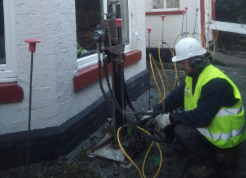
Once the cause is understood, the appropriate treatment can be selected. Resin injection is one of the most effective and least invasive solutions available. During resin injection, expanding material is delivered through small-diameter tubes into the ground, filling voids and consolidating weak zones beneath existing foundations. Where ground weakness is deeper or more severe, micropiles may be required instead of resin injection. The choice between resin injection and alternative methods should always be based on a proper diagnosis rather than the convenience of the treatment provider.
